
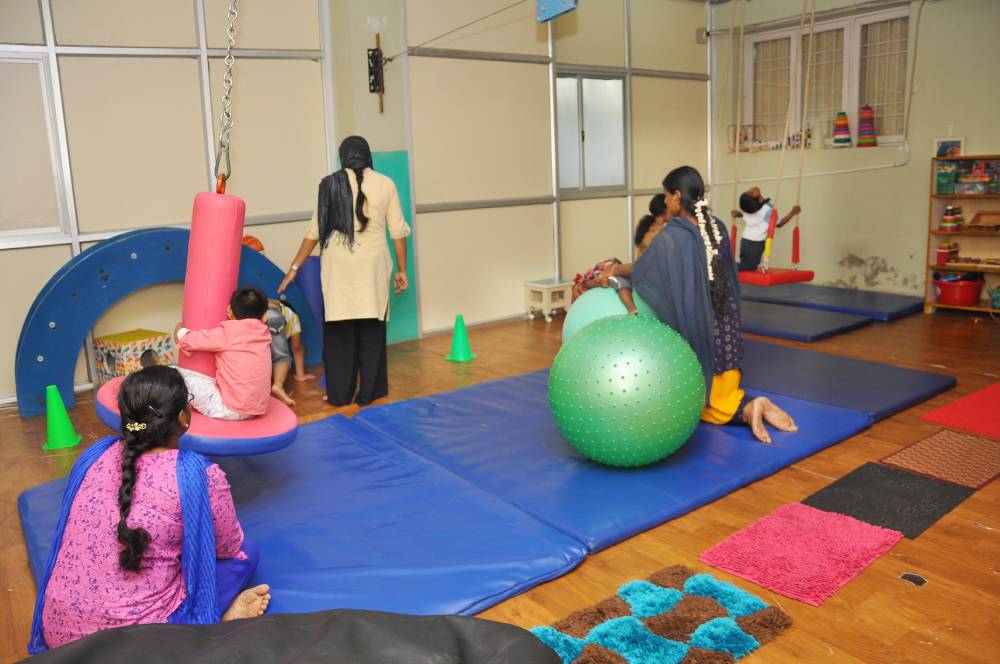
SIT focuses on improving how a child’s nervous system processes and integrates sensory information from both the body and the environment. This includes:
Touch (tactile)
Vision (sight)
Hearing (auditory)
Smell (olfactory)
Taste (gustatory)
Balance (vestibular system)
Body awareness (proprioception)
When these sensory systems do not work together smoothly, children may become overwhelmed, anxious, or show difficulty with daily tasks, learning, and social interaction. SIT helps organize these senses so children can respond appropriately to everyday situations.
SIT is usually play-based and child-centered, making it both effective and enjoyable. Therapists use structured sensory-motor activities that provide controlled sensory input.
Swinging, jumping, or climbing for vestibular stimulation (balance)
Tactile play with textures (sand, putty, water) to enhance touch processing
Obstacle courses for motor planning and coordination
Deep-pressure activities (weighted blankets, body squeezes) for calming input
Auditory and visual exercises to improve focus and attention
These activities are carefully designed to encourage the child’s adaptive responses, improving regulation, attention, and engagement in everyday activities.
The main aim of SIT is to strengthen the child’s ability to process and respond to sensory information effectively. Key goals include:
Improved Sensory Processing – helping the brain interpret and organize sensory inputs
Better Self-Regulation – reducing meltdowns, impulsivity, and anxiety
Enhanced Motor Planning & Coordination – improving balance, posture, and movement control
Increased Participation in Daily Activities – supporting independence at home, school, and in social settings
Positive Behavior & Social Skills – building confidence and supporting peer interactions
Research and clinical evidence show that Sensory Integration Therapy:
Promotes social skills and peer play by reducing sensory-related challenges
Supports emotional stability through better regulation of sensory input
Encourages adaptive behaviors that improve classroom learning and social interaction
Enhances communication and confidence, especially in children with ASD and ADHD
By strengthening neurological processing, SIT lays the foundation for healthy emotional, cognitive, and social development.
At our center, therapy is personalized to your child’s unique sensory profile. Our occupational therapists design engaging sessions that focus on practical, everyday skills while involving families to carry strategies into the home and school environment.