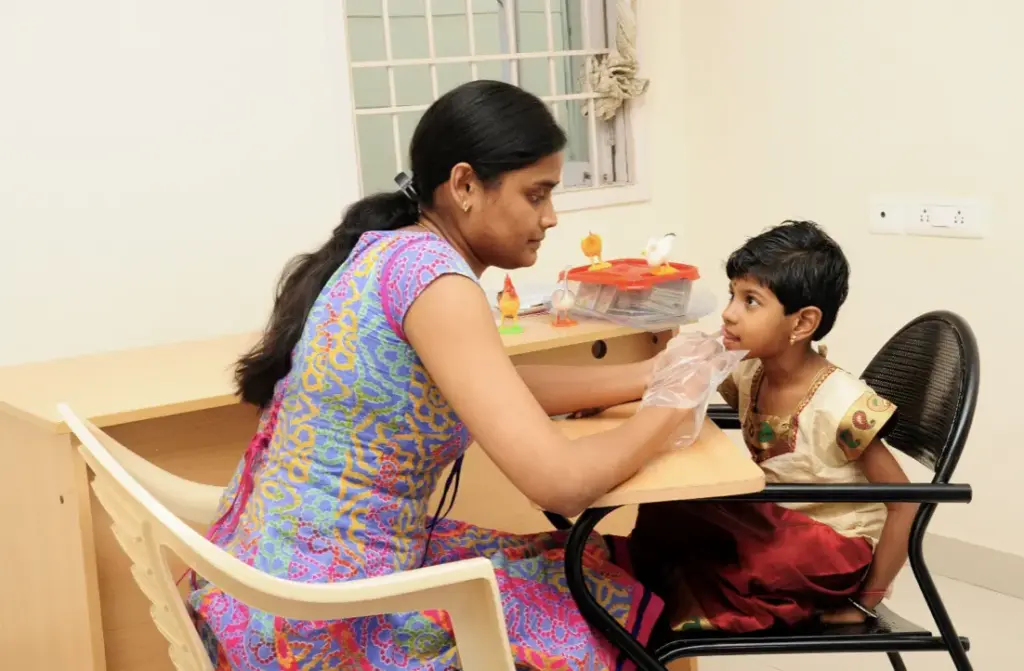
Speech Therapy

Speech therapy is a type of therapeutic intervention focused on improving a person’s ability to communicate effectively. It is provided by speech-language pathologists (SLPs), sometimes known as speech therapists, who are trained to help individuals develop or restore skills related to speech, language, and communication.
Early speech therapy profoundly improves language skills in children by harnessing sensitive periods of brain development, providing targeted intervention for communication challenges, and supporting cognitive, social, and academic growth.
Speech Therapy

Key Benefits

  • Optimal Brain Development: The first three years are critical for language acquisition and therapy is especially effective in building foundations for understanding and using words, sentences, and concepts.
  • Improved Communication & Social Skills: Therapy enhances articulation of thoughts and feelings, reducing frustration and fostering better relationships.
  • Academic & Cognitive Growth: Children learn to follow instructions, build vocabulary, and succeed in academic tasks while benefiting overall cognitive skills.
  • Prevention of Secondary Issues: Addressing delays early prevents wider learning and social gaps, supporting long-term potential.
  • Speech Improvement: Helps individuals with articulation, fluency (stuttering), voice quality, and clarity of speech sounds.
  • Faster Progress: Early intervention enables children to “catch up” to peers in expressive and receptive language, with research showing higher adaptive, motor, and language scores.

Speech therapists employ specialized techniques to help children improve social communication and interact positively with others:

Techniques Include

  • Role-Playing & Social Scripts: Practice social scenarios (greetings, sharing, requests) to build confidence and skills.

  • Social Stories & Visual Aids: Use narratives, pictures, and charts to teach social expectations and emotional understanding.

  • Turn-Taking & Conversation Skills: Engage in interactive games for patience, listening, and conversational exchange.

  • Pragmatic Language Training: Develop language for common interactions and problem solving, understanding context-based communication.

  • Social Skills Groups & Peer Interaction: Promote generalization via small group practice and peer feedback.

  • Family Collaboration: Involve parents, caregivers, and teachers for daily skill reinforcement at home and in school.

These techniques help children build communication, emotional awareness, and social confidence, providing a foundation for lifelong social success

At PTC, our speech therapists will assess your child thoroughly and map out an individualized therapy program that will help your kid reach their full potential or sometimes even beyond.

Why Choose SIT for Your Child?

At our center, therapy is personalized to your child’s unique sensory profile. Our occupational therapists design engaging sessions that focus on practical, everyday skills while involving families to carry strategies into the home and school environment.